[Journal of Psychological Science][2026] Human Intelligence-Inspired Testing for the Developmental Stages of Artificial General Intelligence: From General to Applicable
Abstract
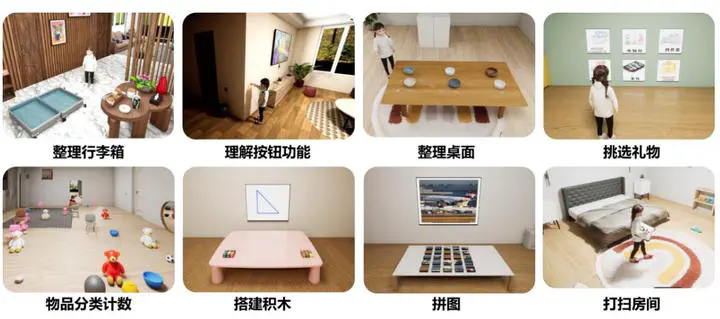
The rapid advancement of artificial intelligence (AI) is profoundly reshaping society, presenting unprecedented opportunities for the development of Artificial General Intelligence (AGI). While generative pre-trained models (e.g., the GPT series) demonstrate remarkable generalization in specialized domains, they remain narrow AI systems, still facing gaps in achieving AGI. Our previous work proposed that AGI demands adaptability to dynamic, embodied environments (Dynamic Embodied Physical and Social Interactive, DEPSI), characterized by infinite-task handling, autonomous task generation, and value-driven decision-making. However, translating abstract AGI definitions into practical testing frameworks remains a critical challenge. Here, we proposed a human intelligence-inspired developmental testing framework for AGI to assess its progression from general to applied capabilities. First, in the general stage, AGI is expected to demonstrate cross-domain foundational cognitive abilities, such as common sense reasoning and adaptive learning, analogous to early childhood intelligence development (ages 0-6). By collecting and analyzing human developmental data, this study establishes a series of general tests to measure an AI system’s “cognitive age.” Specifically, eight representative tasks were selected and implemented in a UE5-based virtual environment, including organizing a suitcase, tidying a desk, and solving puzzles, which cover the cognitive and motor skills expected of 5-6-year-olds. The environment features realistic domestic settings (e.g., kitchens and bedrooms) with interactive objects (e.g., appliances and furniture) and social agents (e.g., family members and teachers) to assess both physical reasoning and social intelligence. A human-user interface, incorporating VR and motion tracking, enables direct comparisons between AI and human performance. Four multimodal large models (GPT-4o, Claude-3.5, Qwen, and Doubao) were tested after being equipped with perception and action modules to interface with the virtual environment. Each task was repeated 10-15 times, with average scores computed for evaluation. Key findings reveal critical limitations in current AI systems. A common limitation lies in their constrained embodied performance. While models approached baseline competence (30/100) in simpler tasks, such as understanding button functions, they struggled in complex, physically interactive tasks, including puzzle-solving and room cleaning. GPT-4o emerged as the strongest performer, leading in five tasks, but still exhibited significant shortcomings in motor coordination. Similarly, the models excelled in language-heavy tasks (e.g., selecting gifts) but underperformed in spatial and sequential-action tasks. This reflects their training bias toward static text/image data rather than dynamic, embodied interaction. The study concludes that current large language models, without specialized adaptation, lack the embodied intelligence required for human-like task execution. Future advancements must prioritize real-time sensory feedback, interactive learning, and improved physical simulation to bridge this gap. Building upon this foundation of general abilities, we introduce a three-phase AGI testing framework, i.e., General-Specialized-Applicable (GSA). The specialized phase emphasizes autonomous learning and skill refinement in specific domains (e.g., Go, mathematics), enabling AI to tackle complex problem-solving and knowledge integration, much like human adolescents mastering specialized subjects. It is noteworthy that general and specialized capabilities are not mutually exclusive but exhibit a synergistic, spiral progression in AGI development. General capabilities form the foundational “operating system” of an agent, enabling cross-domain knowledge transfer and adaptive learning. Conversely, advancements in specialized domains refine this system through novel cognitive patterns and problem-solving methods. This bidirectional reinforcement creates a “general-specialized” spiral trajectory of AGI development. Looking back, traditional AI approaches often bypass general capabilities, focusing narrowly on specialized tasks (e.g., chess). To address this, we advocate a “layered development, dynamic balance” strategy. First achieving threshold general competence, then cultivating prioritized specialized skills while establishing feedback mechanisms to generalize domain insights. This approach prevents premature specialization (“ability silos”) while ensuring practical utility, enabling continuous breakthroughs in both generality and expertise. Finally, the applicable phase evaluates AGI’s generalization ability in real-world environments and industrial applications (e.g., robotics, autonomous driving), verifying whether it can seamlessly integrate into human society and serve practical needs. Overall, the GSA framework aims to provide a potential systematic, human development-inspired standard for AGI evaluation, guiding its development toward intelligence that can sufficiently coexist with and benefit humanity. The GSA framework not only proposed a standardized AGI assessment but may also fostered trust by ensuring alignment with human-centric values and practical applicability, which may advance AGI toward safe and meaningful social integration.

Zhenliang Zhang
Research Scientist of AI
My research interests include wearable computing, machine learning, Cognitive Reasoning, and mixed/virtual reality.